
Quick answer
The best horseback tour of Gettysburg combines guided narration with access to terrain inaccessible by vehicle, typically lasting two to three hours across fields where Pickett's Charge unfolded and Little Round Top anchored the Union line. Most tours depart early morning between April and October when temperatures favor both horses and riders. The park itself is open 24 hours daily with free admission, though guided tours require advance reservation with licensed operators outside park boundaries.
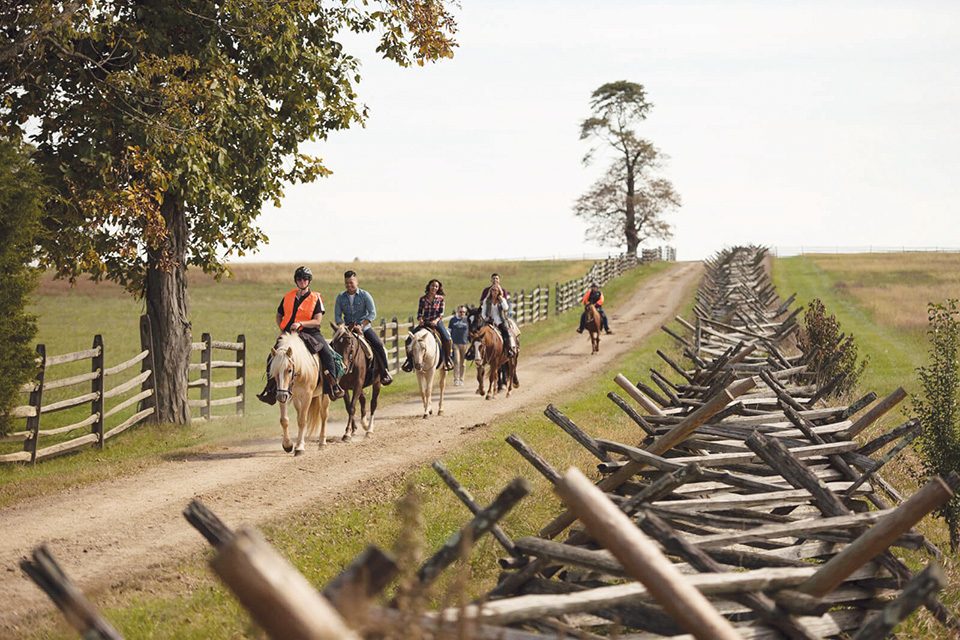
Gettysburg Battlefield spans 6,000 acres of rolling Pennsylvania farmland, and fewer than half of those acres are reachable by paved road. Horseback access opens corridors through wheat fields, orchards, and ridgelines where Chamberlain's 20th Maine held the flank and Stuart's cavalry clashed on East Cavalry Field. Licensed tour operators stable their horses outside park boundaries at farms along Baltimore Pike and Taneytown Road, then trailer riders to trailheads within the military park for departures that align with National Park Service guidelines. Guided equestrian tours of Gettysburg follow designated bridle paths that trace original cavalry movements and infantry advance routes. Most outfitters structure rides chronologically—starting at McPherson's Ridge where the first shots rang out on July 1, crossing Seminary Ridge where Lee positioned his artillery, and finishing near the Angle where the high-water mark of the Confederacy crested and broke. Guides narrate unit positions, tactical decisions, and the human cost of each engagement while horses navigate the same stone walls and creek crossings that slowed formations in 1863. The park welcomes riders year-round, though spring and autumn provide the most favorable conditions. Summer heat stresses horses during midday hours, and winter frozen ground limits trail access. Early morning departures between six and ten o'clock offer cooler temperatures, softer light for photography, and quieter fields before tour bus arrivals. Most operators supply helmets and match riders with horses suited to experience level, from walk-only tours for beginners to extended rides incorporating trot and canter segments for confident equestrians. Riding the best horseback tour of Gettysburg delivers perspective no motor coach can replicate—the sight lines a cavalryman held from his saddle, the grade of slopes infantry climbed under fire, the distance across open ground that seemed infinite to men advancing toward entrenched rifles. The battlefield's scale and sacrifice become visceral when experienced at horse speed across unmediated ground.
“The battlefield's scale and sacrifice become visceral when experienced at horse speed across unmediated ground.”
The Best Time of Day for the Best Horseback Tour of Gettysburg
The best arrival window for a horseback tour is 06:00–10:00. This timeframe provides optimal light for photography and cooler temperatures for horses and riders.
Spring (April-May)
Moderate crowdsMild temperatures, 50°F to 70°F
Wildflowers bloom across the battlefield during this period.
Summer (June-August)
High visitor volumeWarm to hot, 75°F to 90°F
Early morning arrivals are necessary to avoid peak midday heat.
Autumn (September-October)
Moderate to highCool, 50°F to 75°F
The fall foliage provides seasonal color for tours.
Weekday mornings
Low to moderate—
Mid-week visits offer more space on equestrian trails compared to weekends.
Verdict: For the optimal experience, plan your visit for Tuesday to Thursday between 06:00 and 10:00 during the months of April or October.
Operating Hours for the Best Horseback Tour of Gettysburg
The Gettysburg National Military Park and battlefield are accessible daily to accommodate horseback tours throughout the week. Visitors may plan their excursions within these established operational parameters.
| Monday | 00:00–23:59 | |
|---|---|---|
| Tuesday | 00:00–23:59 | |
| Wednesday | 00:00–23:59 | |
| Thursday | 00:00–23:59 | |
| Friday | 00:00–23:59 | |
| Saturday | 00:00–23:59 | |
| Sunday | 00:00–23:59 |
Cost Considerations for the Best Horseback Tour of Gettysburg
Visitors should distinguish between the National Park Service entrance fees and the costs associated with private horseback tour operators. Access to the Gettysburg National Military Park grounds remains free of charge for all visitors.
The typical adult pays 0 USD for park entry, while total trip costs depend solely on the rates set by the chosen private horseback tour provider.
Reaching the Site for the Best Horseback Tour of Gettysburg
The primary hub for visitors accessing the battlefield is located at 1195 Baltimore Pike, Gettysburg, PA 17325. Most travelers arrive by car via major regional routes connecting to this central park entrance.
US-15 to the Baltimore Pike exit
Rabbit Transit to Gettysburg area
Local service to 1195 Baltimore Pike
Etiquette Rules for the Best Horseback Tour of Gettysburg
Gettysburg Battlefield is hallowed ground where thousands fell during three days in July 1863. Respectful conduct honors those who fought and preserves the site for future visitors.
Do
- Stay on marked trails and designated paths at all times
- Follow your guide's instructions regarding pace and route
- Speak quietly to maintain the site's solemn atmosphere
- Dismount when requested near monuments or sensitive areas
- Keep horses calm and under control throughout the tour
- Dress appropriately for riding with long pants and closed-toe shoes
Don't
- Don't climb on monuments, fences, or historic structures
- Don't remove artifacts, stones, or any objects from the battlefield
- Don't let horses graze on battlefield grass or vegetation
- Don't use flash photography that may startle horses or other riders
- Don't bring food or drinks on horseback during the tour
- Don't stray from the group or explore unauthorized areas
Check availability
Frequently asked questions about best horseback tour of gettysburg
Everything you need to know about best horseback tour of gettysburg